
Esthetician Versus Dermatologist for Acne
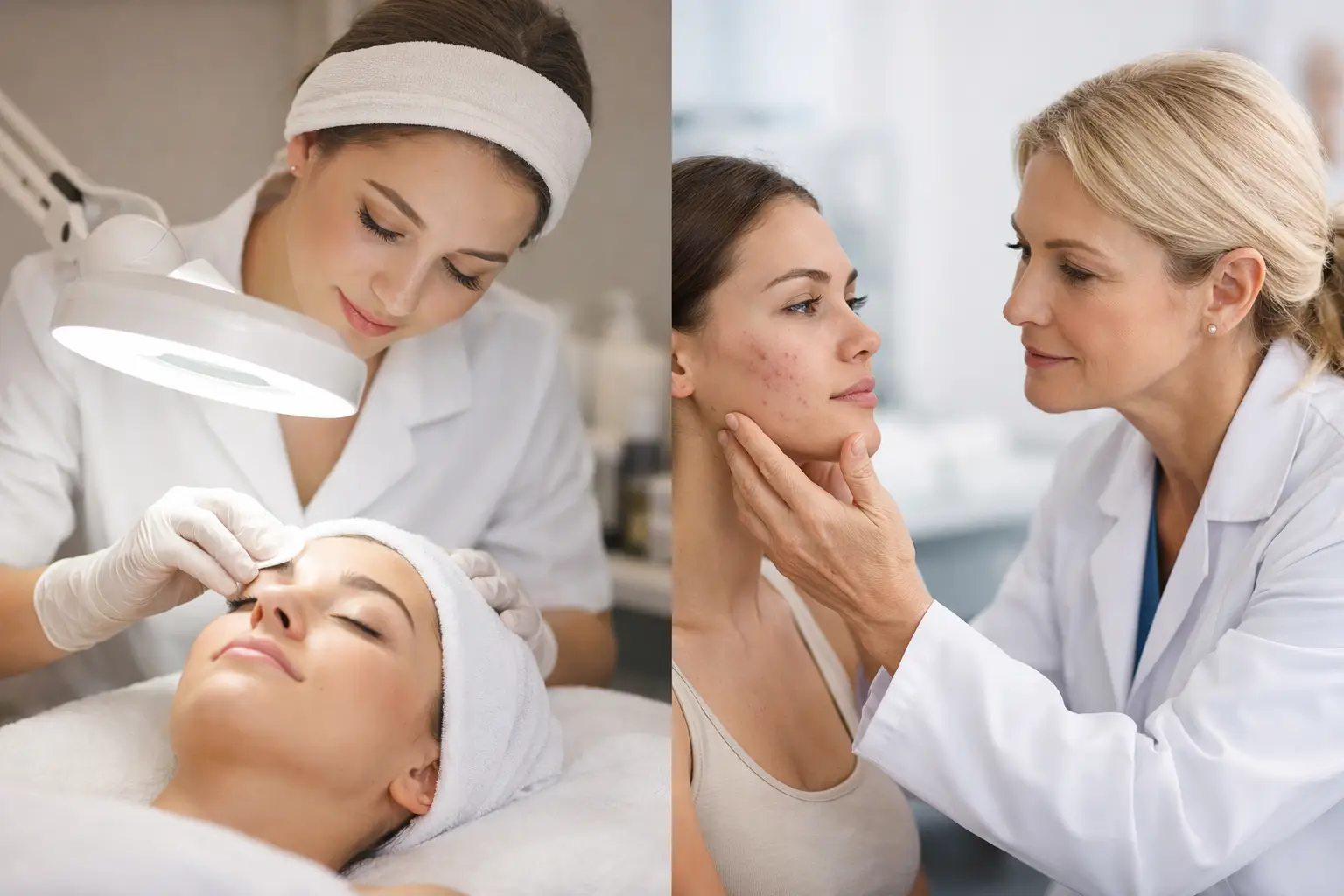
Acne can make even a simple question feel loaded: should you schedule a facial, make a dermatology appointment, or do both? When considering an esthetician versus dermatologist for acne, the most helpful answer is not that one professional is always better. It is about identifying what your skin needs right now, what is driving the breakouts, and what level of care will protect both your complexion and your confidence.
Acne is not a sign that you have failed at skin care. It is a complex skin condition influenced by oil production, clogged pores, bacteria, inflammation, hormones, genetics, stress, products, and sometimes medications or supplements. A thoughtful plan begins with understanding those influences rather than adding another trendy product to an already overwhelmed routine.
Esthetician Versus Dermatologist for Acne: The Core Difference
A dermatologist is a medical doctor who diagnoses and treats diseases of the skin, hair, and nails. For acne, that can include evaluating the severity and pattern of breakouts, ruling out related medical concerns, prescribing topical or oral medications, and treating significant inflammation or scarring.
An esthetician focuses on the health, appearance, and daily function of the skin’s surface. A Master Aesthetician brings advanced training in skin analysis, professional facial treatments, extractions within their scope of practice, ingredient education, and customized home-care guidance. The goal is to support clearer, healthier-looking skin with a plan that respects its barrier and responds to its changing needs.
The distinction matters because an esthetician cannot diagnose a medical condition or prescribe medication. At the same time, a dermatologist may not have the appointment time to walk through every cleanser, makeup product, shaving habit, workout routine, or layer in a client’s home regimen. These roles can be different, but they are often complementary.
When an Esthetician Can Be a Strong First Step
For mild or occasional breakouts, congestion, blackheads, rough texture, and post-breakout discoloration, professional esthetic care can be an excellent starting point. This is especially true when your skin is irritated from experimenting with too many active ingredients or when you are unsure which products are actually contributing to clogged pores.
A detailed consultation should go beyond looking at a breakout under a bright light. Your esthetician may ask about your cycle, stress level, sleep, exercise, hair products, makeup, diet, supplements, medications, and how consistently you use sunscreen. These factors do not create acne in every person, but they can affect inflammation, oiliness, healing, and the success of a treatment plan.
Professional facials for acne-prone skin are not simply about relaxation. A customized treatment may focus on gentle cleansing, careful exfoliation, calming inflammation, supporting hydration, or clearing suitable congestion without unnecessary trauma. Done appropriately, extractions can be useful for certain blackheads and clogged pores. Done aggressively, they can increase redness, irritation, and the risk of post-inflammatory hyperpigmentation.
The at-home plan is just as meaningful. A good esthetician helps simplify your routine and explain why each product is there. You may need a gentle cleanser, a thoughtfully selected corrective product, a barrier-supporting moisturizer, and daily broad-spectrum sunscreen. The best routine is not the one with the most steps. It is the one you can use consistently without leaving your skin dry, tight, or inflamed.
When a Dermatologist Is the Better Choice
Medical care should come first when acne is painful, deep, widespread, rapidly worsening, or likely to leave scars. Cystic lesions, nodules, persistent inflammatory acne, and breakouts that do not improve with appropriate professional skin care deserve a dermatology evaluation. Early treatment can help reduce the chance of lasting scars, which are more difficult to address than active acne.
A dermatologist is also essential when acne may be connected to a medical or hormonal issue. Sudden adult-onset acne, irregular periods, excess facial hair, scalp hair changes, or acne that follows a clear hormonal pattern may call for a broader evaluation. Similarly, acne-like rashes are not always acne. Conditions such as folliculitis, rosacea, or perioral dermatitis can look similar but require a different approach.
Prescription options can be transformative for some people. A dermatologist may recommend retinoids, topical antimicrobials, hormonal therapies, oral medications, or other treatments based on your medical history and the type of acne present. These medications can have side effects and require professional oversight, which is why self-treating with strong products is not a substitute for diagnosis.
If you are pregnant, trying to conceive, breastfeeding, taking prescription medications, or managing a health condition, it is especially wise to involve your medical provider before using certain acne treatments. Safe skin care is never one-size-fits-all.
The Value of Working With Both Professionals
For many adults, the best answer to esthetician versus dermatologist for acne is not either-or. Dermatology can manage the medical component, while ongoing esthetic care supports the skin through professional treatments, product selection, and practical accountability between medical visits.
For example, someone using a prescription retinoid may experience dryness, flaking, or sensitivity while their skin adjusts. An esthetician can help refine the non-prescription side of the routine so the client is less tempted to stop treatment altogether. That may mean choosing gentler cleansing, reducing unnecessary exfoliation, improving moisturization, and selecting a sunscreen that feels comfortable enough to wear daily.
Likewise, after active acne is under control, an esthetician can help address the visible aftermath. Post-inflammatory hyperpigmentation, uneven texture, and lingering congestion often need a patient, skin-specific strategy. Results come from respecting the skin’s healing timeline, not repeatedly stripping or over-exfoliating it.
Communication matters in collaborative care. Tell your esthetician about every prescription, over-the-counter active, supplement, and recent procedure. Tell your dermatologist about the professional treatments and products you are using. This helps prevent conflicts, such as combining multiple exfoliants with a prescription retinoid or scheduling a treatment when the skin is too sensitized.
What to Avoid While You Decide
The urge to attack acne is understandable, but overcorrection is one of the most common reasons skin becomes more reactive. Avoid picking, squeezing inflamed pimples at home, rotating through several new products at once, and using harsh scrubs or high-strength acids every day. More irritation can mean more redness, slower healing, and darker marks after a breakout.
Be cautious with social-media advice that treats every blemish as identical. Acne on the jawline, tiny uniform bumps on the forehead, deep chin breakouts, and scattered whiteheads can have different contributing factors. A product that helps one person may be too drying, too heavy, or simply irrelevant for another.
Instead, give a well-chosen routine time to work. Acne improvements are rarely instant. Skin cells turn over gradually, and many treatments need several weeks before you can judge whether they are helping. During that time, track changes with clear photos and notes about flare-ups, new products, stress, and cycle changes. This creates useful information for your provider instead of relying on memory alone.
Choosing Care That Feels Personal and Safe
Look for an esthetician who asks questions before recommending products or performing extractions. You should understand what the treatment is intended to do, how it fits your current skin condition, and what you should expect afterward. A results-oriented provider will be honest when a dermatology referral is the safest next step.
At The Skin Genie, acne support begins with that kind of careful assessment. Your skin, lifestyle, history, and goals all deserve consideration before a facial or home-care routine is selected. Clearer skin is not built on generic advice. It is built through informed, consistent choices that support your skin rather than fight it.
If your acne is painful, scarring, or persistent, make the medical appointment. If you are dealing with congestion, product confusion, healing marks, or a routine that no longer makes sense, personalized esthetic care can offer valuable guidance. The right next step is the one that gives your skin the support it needs to heal steadily and safely.
Ready for healthier skin?
Book online in a minute, no credit card needed, or call me for a free 10-minute consultation.