
Esthetician Versus Dermatologist Acne Care
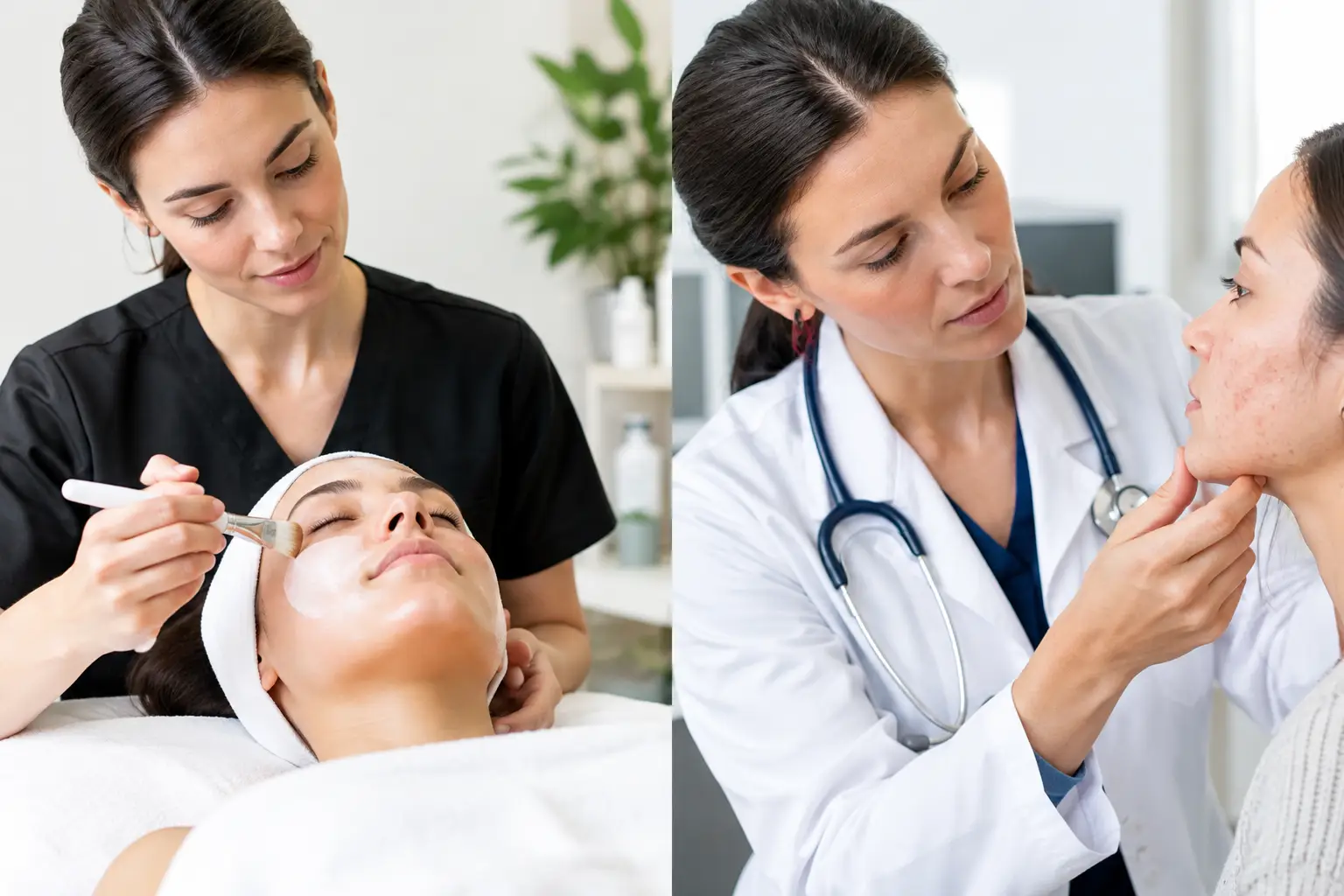
A stubborn breakout can make every new product feel like a promise. You try the cleanser a friend loves, add a spot treatment, skip moisturizer, then wonder why your skin feels more inflamed instead of clearer. The esthetician versus dermatologist acne question is not about choosing one expert over the other. It is about understanding what your skin needs now, what is safely within each professional’s scope, and when a coordinated approach can make the most sense.
Acne is not a sign that you have failed at skin care. It is a complex inflammatory condition influenced by oil production, clogged pores, bacteria, hormones, genetics, medications, stress, product use, and sometimes lifestyle habits. Clearer skin usually comes from consistent, informed care rather than a single facial or a miracle product.
Esthetician Versus Dermatologist Acne: The Core Difference
A dermatologist is a medical doctor who specializes in conditions affecting the skin, hair, and nails. Dermatologists can diagnose acne and related skin conditions, prescribe medication, order tests when appropriate, and treat more severe or persistent cases. Their medical training is particularly valuable when acne is painful, widespread, leaving scars, connected to a possible hormonal concern, or not responding to appropriate over-the-counter care.
A licensed esthetician focuses on the health and appearance of the skin through professional skin analysis, customized topical routines, corrective treatments within their license, and client education. A Master Esthetician has advanced training in skin care techniques, treatment safety, ingredients, and skin conditions, though an esthetician does not diagnose disease or prescribe medication.
That distinction matters, but it should not make the decision feel all-or-nothing. Dermatology and professional esthetics address different parts of the acne picture. One may be essential for medical treatment; the other can provide the detailed, ongoing support that helps a client use products correctly, protect the skin barrier, and stay consistent with a realistic routine.
When a Dermatologist Should Be Your First Call
Schedule with a dermatologist promptly if you have deep, tender bumps beneath the skin, cysts, nodules, significant scarring, sudden severe acne, or acne that is affecting your emotional well-being. These forms of acne can leave permanent marks, and delaying medical treatment can make that risk greater.
A dermatologist is also the right starting point if breakouts appear alongside other changes, such as irregular menstrual cycles, excess facial hair, rapid changes in skin oiliness, or symptoms that may point to a hormonal or medication-related issue. Acne around the jawline can be hormonal, but location alone cannot confirm the cause. This is where medical evaluation is more useful than internet guesswork.
Prescription options may include topical retinoids, topical or oral antibiotics, hormonal therapies, or isotretinoin for certain severe cases. Each option has benefits, limitations, and possible side effects. A dermatologist can determine whether medication is appropriate and monitor your response safely.
If you are pregnant, trying to conceive, or breastfeeding, do not assume your usual acne products are safe. Ask your medical provider before using prescription or active treatment products. This is especially true for retinoids and certain oral medications.
When an Esthetician Can Be a Valuable Part of Acne Care
Many adults with mild to moderate congestion, blackheads, whiteheads, occasional inflammatory breakouts, or post-breakout discoloration benefit from professional esthetic care. An esthetician can look closely at your skin, current products, treatment history, habits, and goals to identify where your routine may be working against you.
Often, the issue is not that someone is doing too little. It is that they are doing too much. Over-exfoliating, using several strong actives at once, picking blemishes, applying drying products without replenishing moisture, or changing routines every week can weaken the skin barrier. When the barrier is stressed, skin may become irritated, red, dehydrated, and more difficult to manage.
A customized facial or corrective treatment may support acne-prone skin through careful exfoliation, professional extractions when appropriate, calming ingredients, and a plan tailored to your current level of sensitivity. The right treatment is never simply the strongest one. It should respect active inflammation, medication use, pigmentation concerns, and your skin’s ability to recover.
Professional guidance is also useful for the practical details that are easy to overlook: choosing a sunscreen you will actually wear, learning how much product to apply, introducing one active at a time, and knowing when temporary dryness is expected versus when irritation means you should pause. These small adjustments can have a meaningful effect over time.
The Best Acne Plan Often Has Two Parts
For clients who are under a dermatologist’s care, esthetic services can often complement the medical plan. The key is communication. Let your esthetician know about every prescription, over-the-counter active, supplement, and recent treatment you are using. Bring photos or product names if needed. This helps prevent unnecessary irritation and allows treatments to be adjusted safely.
For example, someone using a prescription retinoid may need a gentler facial approach, fewer exfoliating products at home, and extra attention to hydration and daily sunscreen. Someone taking oral acne medication may need to avoid certain treatments altogether during use. Good skin care is not about forcing a standard service onto every face. It is about making informed choices based on what the skin is experiencing.
The same principle applies to hyperpigmentation after acne. Brown or red marks can remain long after a blemish heals, particularly for deeper skin tones or after repeated picking. An esthetician can help build a pigment-conscious routine and support skin recovery, while a dermatologist may be needed for stubborn discoloration, scarring, or procedures beyond an esthetician’s scope.
What to Expect From a Thoughtful Acne Consultation
A useful acne consultation should go beyond identifying “oily” or “dry” skin. Acne-prone skin can still be dehydrated, sensitive, or compromised. The goal is to understand the patterns behind your breakouts and build a plan you can follow consistently.
At The Skin Genie, that whole-person conversation may include your current routine, makeup and hair products, exercise habits, stress level, diet, supplements, medications, sleep, and how often you touch or pick at your skin. None of these factors should be used to blame you for acne. They simply offer clues that can help guide safer recommendations.
You should leave with clear direction, not a crowded shelf of products and more confusion. In many cases, a simple routine is the most effective place to begin: a gentle cleanser, targeted treatment selected for your skin, barrier-supportive moisturizer, and broad-spectrum sunscreen. More products do not automatically create better results.
Give Your Plan Enough Time to Work
Acne treatment requires patience. Most routines need several weeks before you can fairly evaluate progress, and some prescription treatments may cause temporary dryness or an adjustment period. That does not mean you should push through severe burning, swelling, rash, or peeling. Those are reasons to contact your provider or esthetician for guidance.
Track progress by taking consistent photos every few weeks rather than judging your skin hour by hour in a magnifying mirror. Look for fewer new inflamed blemishes, faster healing, less congestion, and improved comfort. If your acne is worsening, becoming painful, or leaving scars, move medical evaluation higher on your priority list.
Your skin deserves more than random advice and aggressive treatments. Whether you begin with a dermatologist, an experienced esthetician, or both, choose guidance that listens carefully, respects treatment safety, and gives your skin the steady care it needs to heal.
Ready for healthier skin?
Book online in a minute, no credit card needed, or call me for a free 10-minute consultation.